
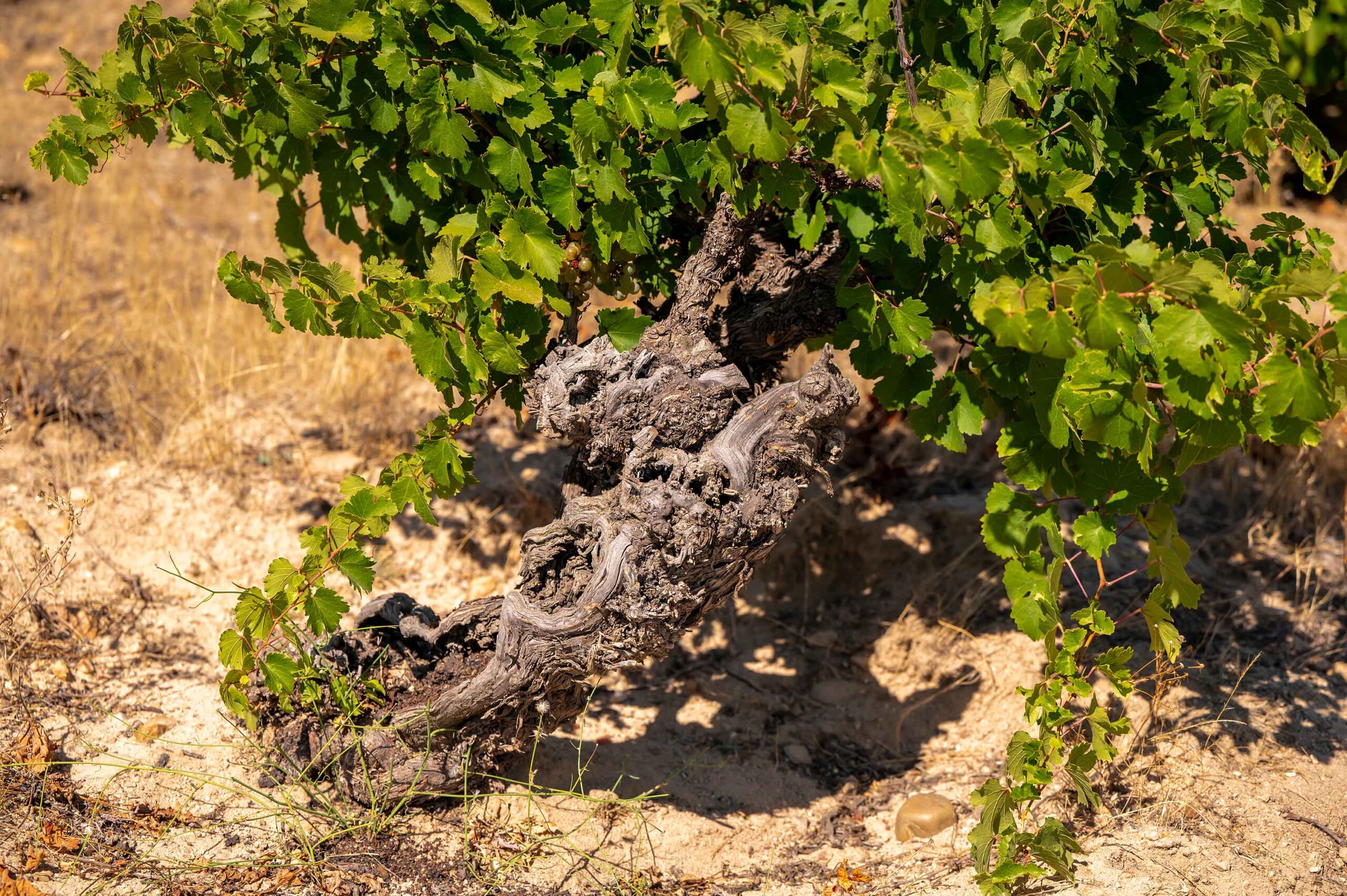
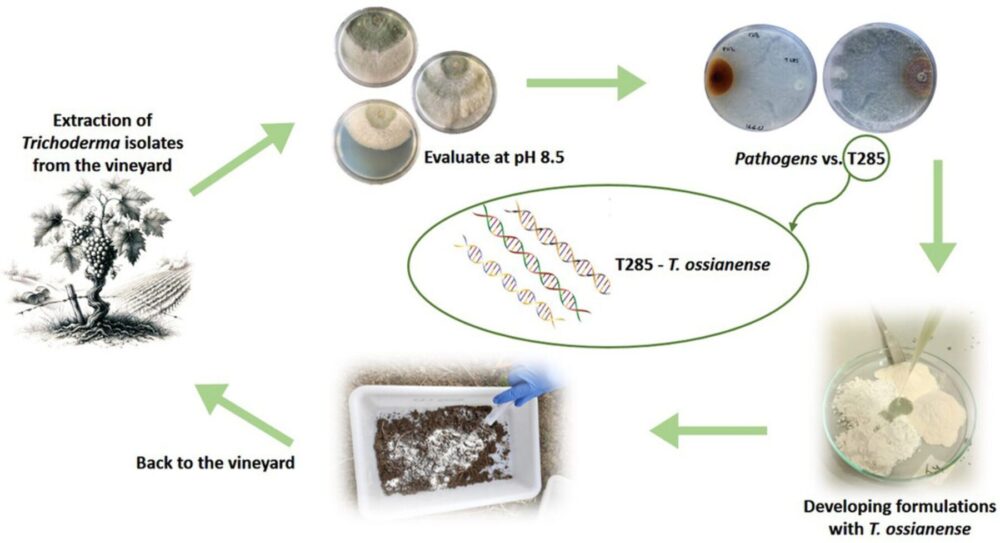
The search for natural solutions to protect vineyards has led us to discover a new ally with great potential for viticulture: the new species Trichoderma ossianense, isolated from the roots of the centuries-old vineyards in Ossian. This microorganism represents a scientific discovery, the result of research carried out in collaboration with the University of León as part of the LowpHWine project.
This new fungus, adapted to alkaline soils, possesses very interesting characteristics as a biological control agent against soil-borne vine wood diseases such as black root rot, caused by pathogens such as Ilyonectria and Dactylonectria. It is a fungal disease that attacks the root system and the base of the rootstock, causing black lesions, necrosis and asphyxiation in the plant. It is one of the main threats to young vine plants.
Other characteristics and benefits of Trichoderma ossianense
However, beyond its effectiveness against this disease, Trichoderma ossianense stands out for its ability to thrive in unfavourable environmental conditions – such as soil with an alkaline pH – where other microorganisms face greater difficulties.
Furthermore, research has led to the development of formulations based on plant residues, such as wheat and seaweed, which maintain the viability of the spores, thereby facilitating their application in the vineyard and promoting their growth once incorporated into the soil.
Like other fungi of the genus Trichoderma, it naturally colonises the plant’s roots, creating a biological barrier that helps protect it against fungal diseases. Thanks to these characteristics, it is emerging as a promising tool for more sustainable and regenerative viticulture, particularly in vineyards situated on alkaline soils.
Its ability to combine effectiveness, adaptation to the environment and the use of natural resources makes it an example of how innovation, research and development can help tackle some of the major health challenges facing viticulture today.
Why use Trichoderma ssp. as a biological control agent?
The genus Trichoderma is characterised by its cosmopolitan nature and its extraordinary ability to adapt to diverse ecological niches. Its presence in different ecosystems and environmental conditions has enabled it to become a particularly opportunistic organism, capable of colonising a wide range of soils, roots and other substrates.
One of the most notable characteristics of these fungi is their ability to interact with other microorganisms present in the soil. Some species act as natural antagonists of pathogenic fungi, helping to limit their growth and thus contributing to the health of the vineyard.
As well as inhabiting the soil, many Trichoderma species are capable of establishing beneficial relationships with plant roots. They can even colonise the plant’s internal tissues without causing damage, forming associations that promote the biological balance of the root environment and strengthen the plant’s ability to cope with stressful conditions.
Their success in the natural world is due to millions of years of evolution, during which they have developed great genetic diversity and remarkable versatility in adapting to different environments. This ability enables them to compete with other microorganisms for nutrients and space and to colonise new environments rapidly.
Thanks to these properties, species of the genus Trichoderma have become one of the most promising biological tools for moving towards more sustainable agriculture, where soil health and the balance of ecosystems play a fundamental role.
Thus, Trichoderma ossianense is an example of how observation, research and collaboration can transform a natural discovery into a tool capable of having a positive impact on the future of viticulture.